
Finite vs. Infinite Games
A mental model to make better long-term decisions

Have you ever played a game only to realise the rules were different from what you thought they were?
For me, it most often happened when playing Uno with friends who had their own house rules. As you know, when you don’t know the real rules of the game, you’re going to get in trouble.
That’s why understanding the difference between finite and infinite games is so important.
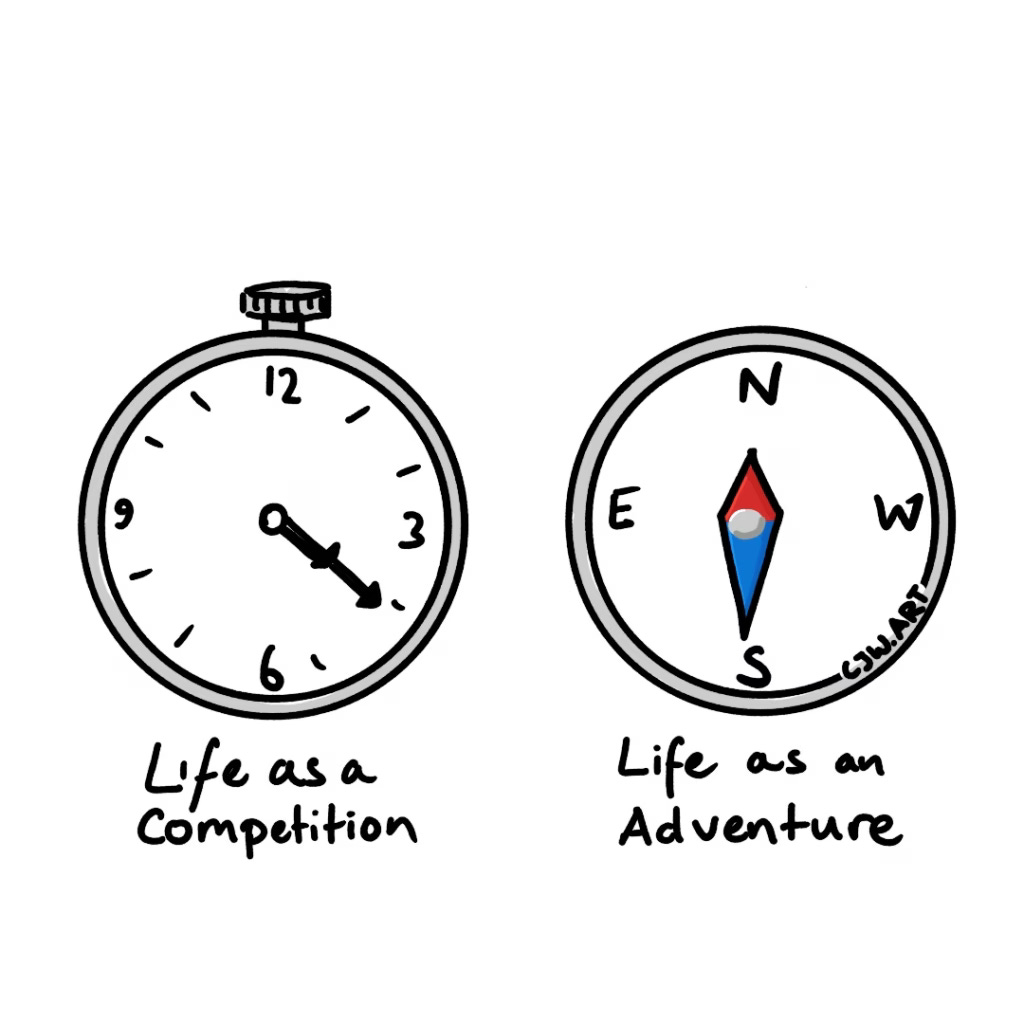
If you think you’re in one game but really in the other, you’ll make seriously costly mistakes.
In this article, I’ll take you through this simple mental model and some ways you can apply it in life. (Sorry, no advice on how to win Uno here!)
What is the finite vs. infinite games mental model?
James P. Carse originally coined these terms in his book Finite and Infinite Games in 1989, before Simon Sinek popularised them more recently in his book, The Infinite Game. It states that:
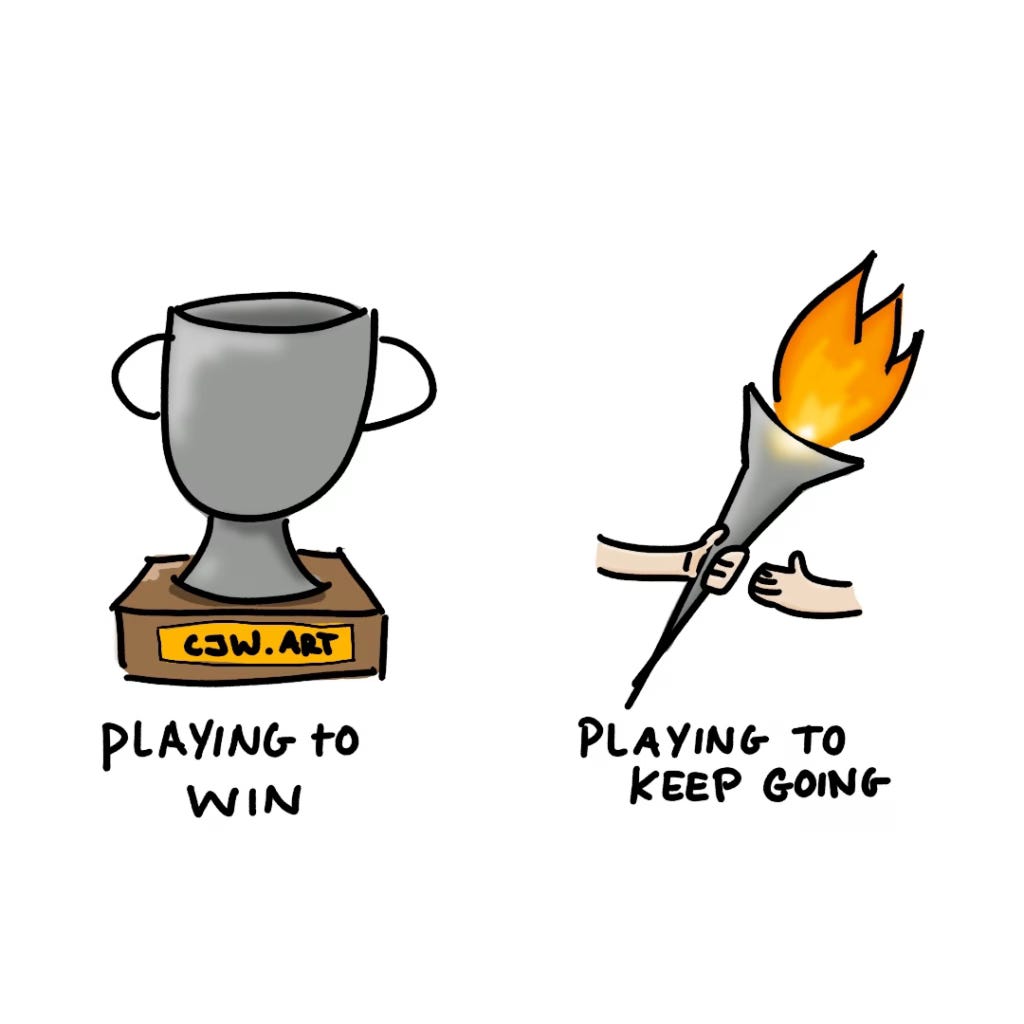
Finite games have known players, fixed rules and clear winners and losers. The goal here is to win. Some examples include sports like football and golf, elections, and exams.
Infinite games, in contrast, have both known and unknown players where the rules change, and there is no clear end. Instead, the goal is to keep playing. Examples in this case include business, relationships, and personal development.
A simple concept, but recognising what type of game you are playing is important.
Why it matters?
Most areas in life are infinite games rather than finite ones. And yet, many of us approach them as though they were finite games. This can lead to repercussions, such as:
Short-term success, but long-term failure: Focusing on beating others can lead to burnout or missing the long-term opportunity.
Not adapting to disruptions: Infinite games don’t have set rules or players, which can lead to established players losing out suddenly when the world changes.
Not sticking to your values: When we see infinite games as a game to win, we naturally optimise for the outcomes that help us “score points”. But it’s all too easy to sacrifice deep values this way. It’s why so many companies will do anything to make more money.
Zero-sum thinking in a win-win world: Finite games typically have one winner only. But most aspects in life have multiple “winners”. When we treat others as our rivals for success, we can miss collaborations where we can all grow more than when we compete.
An inability to change game: What happens when your finite game ends? Or what happens if you are stuck in one game, but really you’d like to move to another? When we focus on keeping going, sticking to our core values and having fun, it’s okay to change.
When we play the right game, understanding what kind of game we’re playing, we can approach each one in the right way.
How to apply infinite games in daily life
The first obvious application is to realise when you are in an infinite game, not a finite one. Good news! It’s easy, as most situations are actually infinite games. But, to be absolutely sure, check if there are fixed rules (ways to do the thing with an impartial judge) and fixed players — if yes, it’s a finite game.
With that covered, you can focus on making the most in each arena of life.
Business
Be wary of chasing short-term results such as increasing sales 10x. This can lead to compromises which cost you customer loyalty. Instead, focus on meeting your customer demands and delivering greater value.
This is why Jeff Bezos obsesses over customer satisfaction.
Learning and growth
If you approach learning like a finite game, then you’ll just study for tests and grades. This is great for getting through school, but not for long-term learning or for developing really useful skills for life.
Instead, focus on learning the topics that really interest you and working on how you can actually apply what you learn (even if the syllabus is forced upon you).
For more tips on lifelong learning, check out this post (with visuals, of course).
Relationships
One of the worst things for any relationship is trying to “win” an argument. You may succeed, but you’ll harm your relationship.
That doesn’t mean you should deny the truth or give in, but your focus should be on growing together, not winning. When it is, you’ll avoid arguments spiralling out of control.
Health
[I write this next section having finally restarted going to the gym after a 6-year absence, and I’m all too aware of how easy it would be to slip out of the routine again.]
How often have you started a new health kick to go back to your old ways a month later? It’s the reason gyms put out extra equipment in the first weeks of January, only to remove them when those New-Year’s-resolutioners have given up.
Sometimes it’s shortsightedness, adopting a rollercoaster lifestyle of losing weight, then getting healthy again, only to repeat the cycle. But other times it’s because the goal is too intense, rather than a habit for long-term health.
Check out these visuals on habit formation if you need some help creating a health habit that sticks.

Conclusion: Play more infinite games
Life is about “winning”; it’s about staying in the game with integrity, curiosity, and having fun. When we do, we might sacrifice some short-term achievements, but we’ll benefit from long-term satisfaction and results.
Question: Are there any areas of life you’ve been treating as a finite game? What would happen if you treated them as an infinite game?
Want to share ideas that matter to you? Sign up for this free email course to learn how to draw anything (sketchily) in just 5 days.
Or if you’d like me to sketch your ideas for you, check out my services.
And if you’d like a different topic visualised in the future, let me know what you’d like to see!